Visualizing Subtle Surface Features with IFCEH Series
For glossy workpieces, surface reflections can make it difficult to detect subtle surface irregularities and differences in shape.
By optimizing the angular distribution and direction of illumination, surface features that are difficult to detect using conventional lighting methods can be made more visible.
Leimac’s IFCEH series features a slim, square dome-style design with a specially engineered light distribution.
The 4-channel model enables independent control of illumination from four directions, supporting surface shape analysis using photometric stereo.
Features of the IFCEH Series
Conventional dome lights provide diffuse illumination from multiple directions by reflecting light off the inner surface of a dome-shaped reflector.
This approach helps minimize localized glare and brightness variations, providing uniform illumination across the workpiece. However, the resulting diffuse illumination may reduce the visibility of subtle surface irregularities.
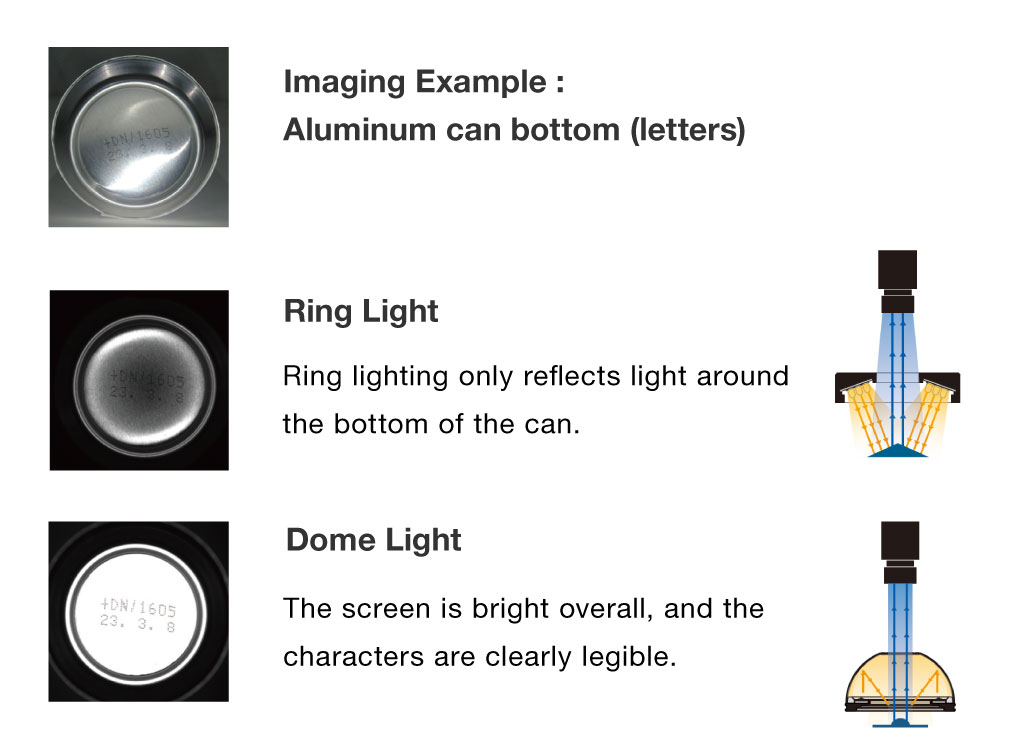
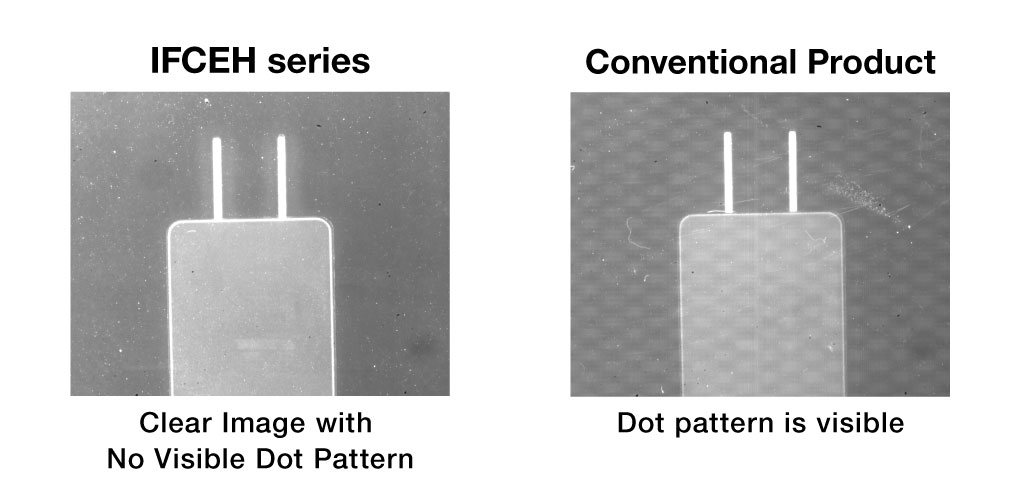
The IFCEH Series combines the benefits of dome-style illumination with an enhanced oblique-light component, making subtle surface irregularities easier to detect.
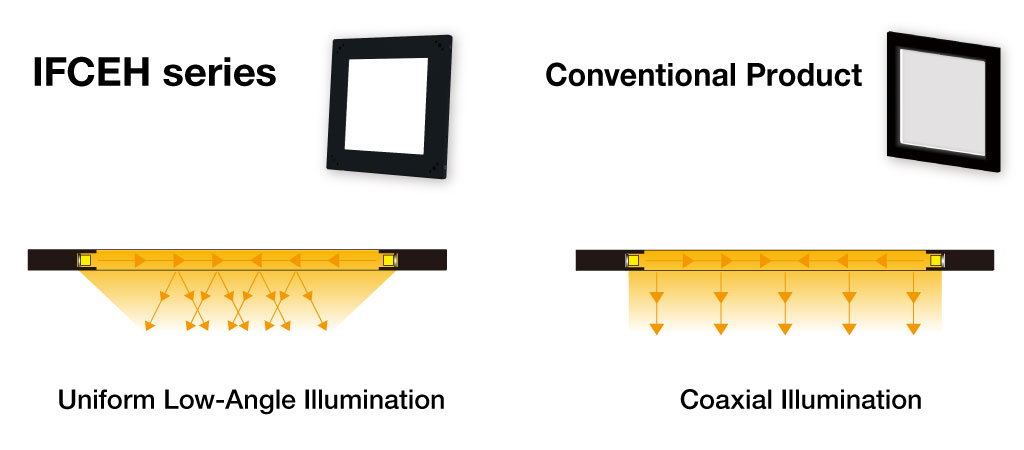
The IFCEH series incorporates a specially designed light guide plate (LGP) to achieve a light distribution optimized for enhancing the visibility of subtle surface irregularities.
Imaging Example: Scratch Inspection on Metal Parts
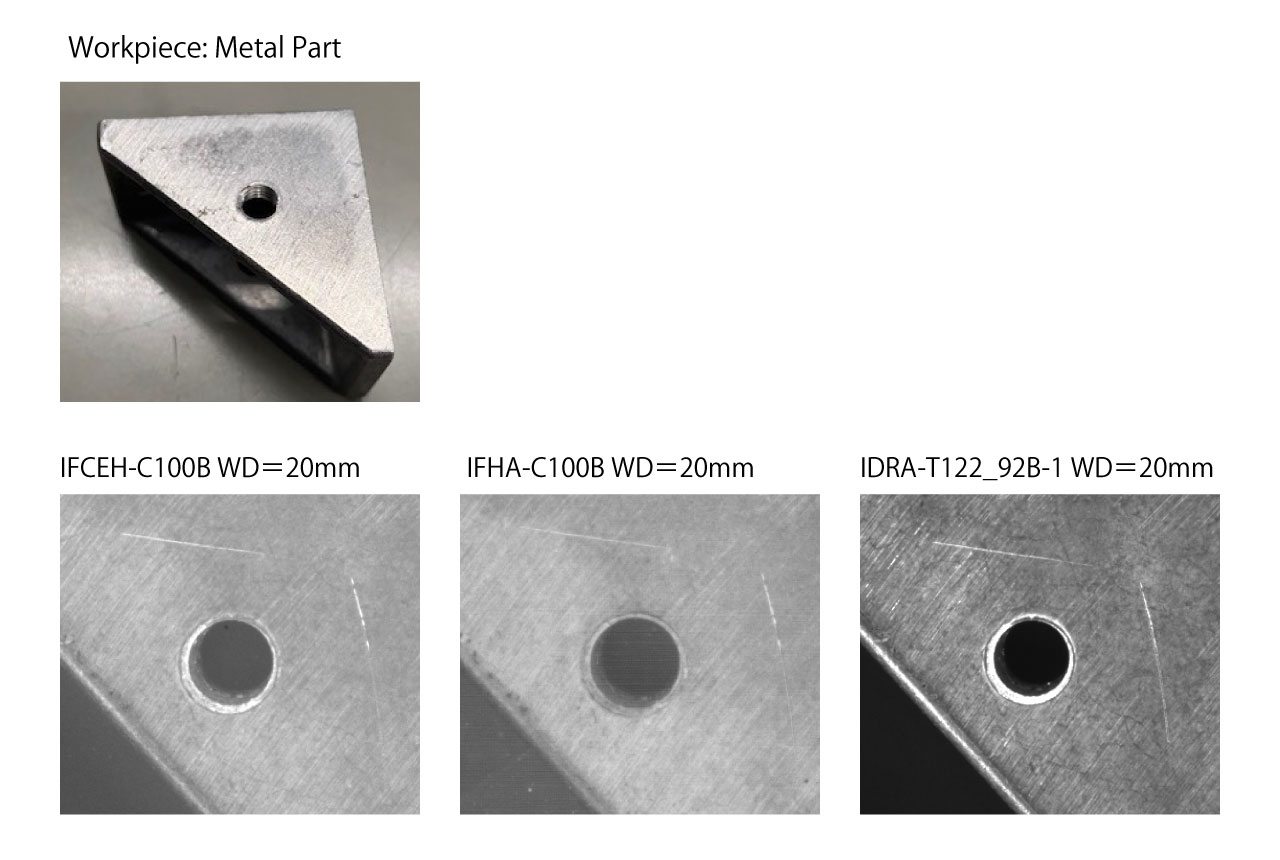
Scratches on the surface of a metal part were captured and compared using three lighting types with different illumination characteristics.
-
IFCEH: Captures scratches with high contrast
while reducing the influence of surface hairlines. - IFHA: In this example, the scratches appear less distinct.
-
IDRA-T (Horizontal Opposed Lighting):
Scratches are clearly visible, but the surface hairlines
are also emphasized.
For this workpiece, IFCEH produced clear images of the scratches while maintaining good visibility through the light guide plate.
Photometric Stereo Applications with the 4-Channel Model
The IFCEH series features consistent illumination angles across the field of view, regardless of position.
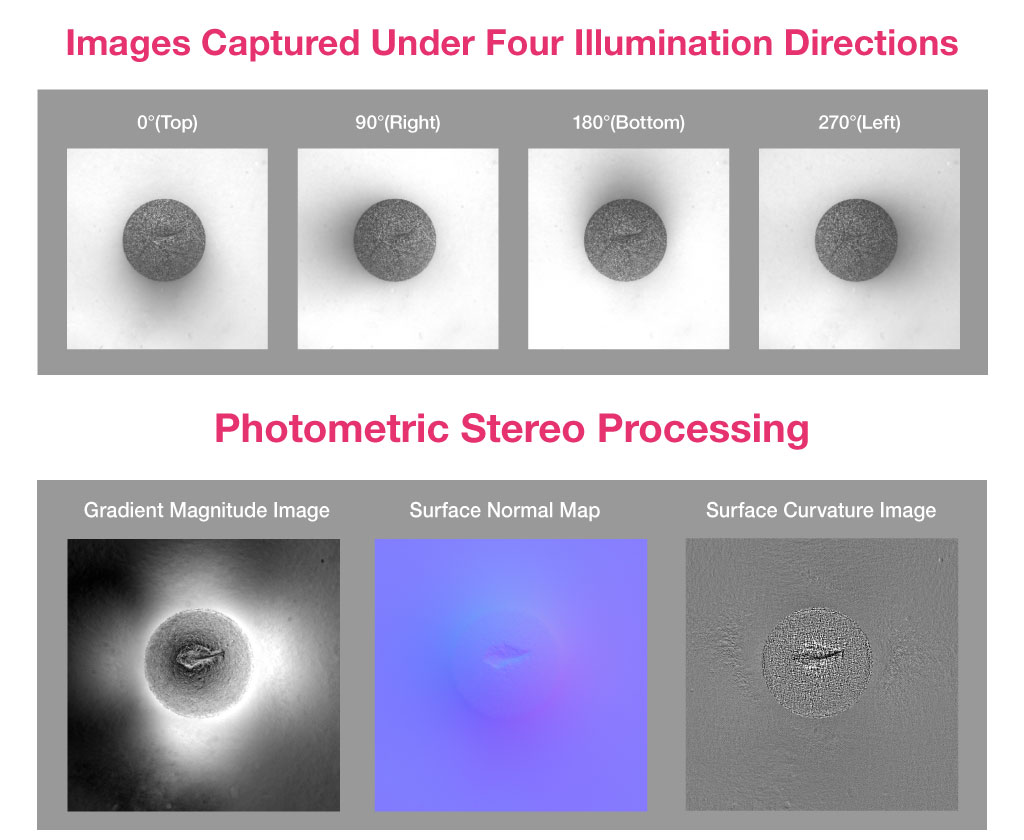
Leveraging this characteristic, the 4-channel model allows independent control of illumination from four directions, enabling surface shape visualization using photometric stereo.
By processing multiple images captured under different illumination directions using photometric stereo, surface height variations can be extracted, making it easier to detect fine scratches and subtle differences in surface shape.
In this case study, we present an imaging example of a mottled table using the IFCEH series.
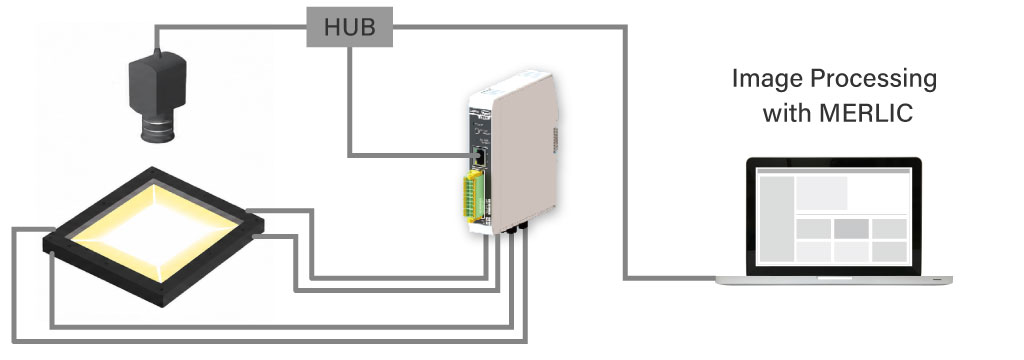
System Configuration Example
Equipment Overview
Slim Square Dome Light | IFCEH Series
A slim square dome light featuring illumination characteristics with a strong oblique-light component and a compact, space-saving design.
The 4-channel model supports independent control of illumination from four directions.
Product Page Coming Soon
Compatible Lighting Controller
Multi-Channel Programmable Controller | IDMU-P Series
A controller used to control illumination for each channel.
It enables the configuration of a lighting control system for photometric stereo applications.